360° Breathing
What is 360° Breathing?
You may have heard of belly breathing — and while it’s a useful tool, a true deep breath shouldn’t just move your belly. It should move throughout your entire torso - the front, the sides, and even the back.
Picture inflating a balloon. As it fills with air, it expands in every direction, not just one. Your lungs and ribcage behave in a similar way.
This 360° Breathing exercise will teach you to stretch out your lungs, ribcage, and diaphragm. Allowing your breath to flow fuller, deeper, and more effortlessly.
Level 1:
Prep:
You can be seated, or lie on your back with knees bent and feet flat on the floor.
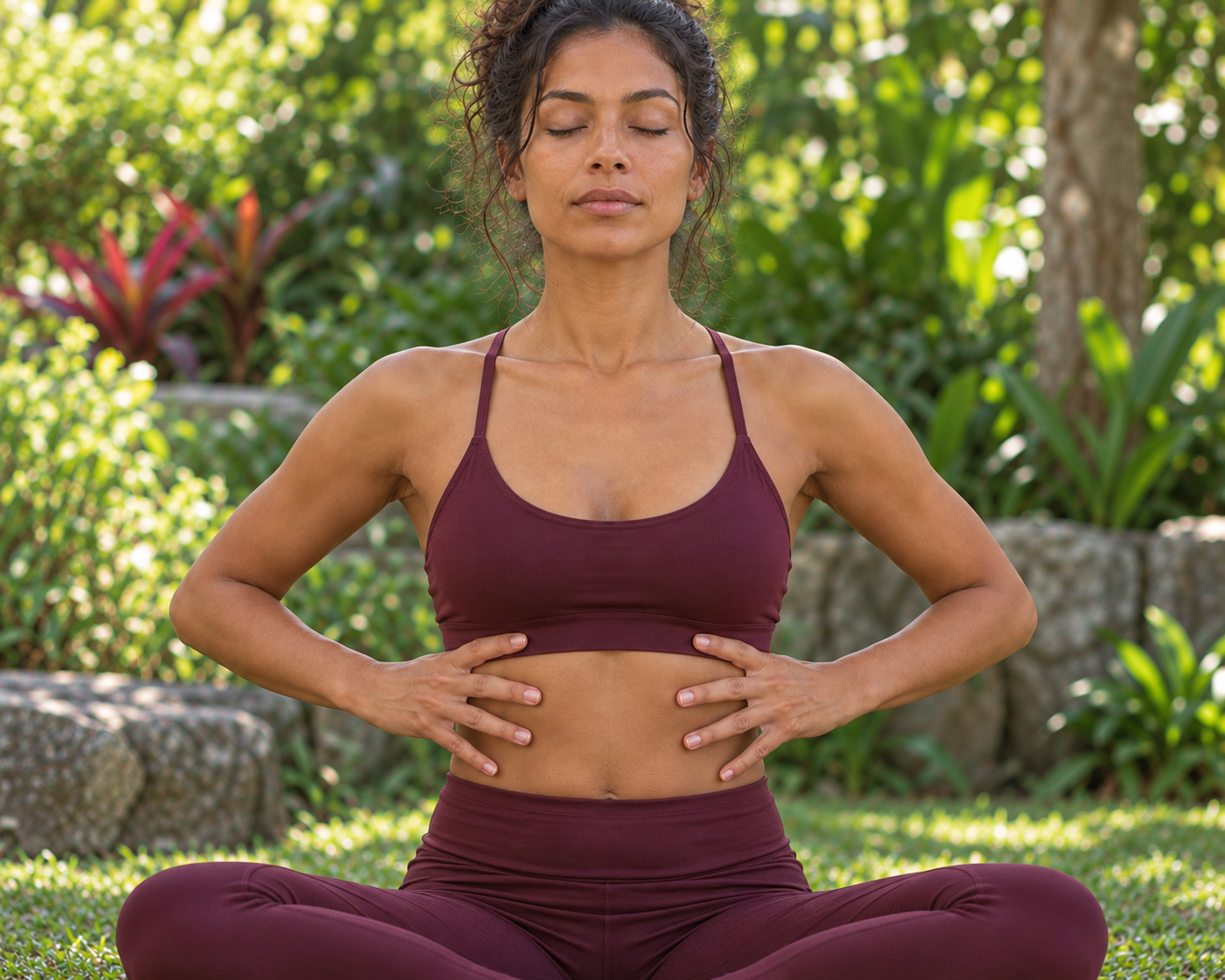
Position your hands - in a ‘power pose’ - on the lowest part of your ribcage.
Fingers wrapping towards front, thumbs wrapping towards the back
Chest open, elbows out wide
Shoulders relaxed
Don’t squeeze or grip your ribs — your hands are just there to help you feel the movement of your ribcage
Steps:
1) Take a full, deep inhale through your nose.
2) Don’t exhale yet - continue taking small inhales, until you can’t inhale anymore
3) Hold your breath for a few seconds – feel the lungs expand in every direction
4) Exhale - slowly & deeply from your mouth (like blowing out from a straw) - until your lungs feel empty
5) Don’t inhale yet - continue taking small exhales, until you can’t exhale anymore
6) Hold your breath for a few seconds – feel the lungs contract from all directions
(Repeat 10x)
Tips:
Stop when you reach your limit, don’t push yourself too much
It should feel like a stretch - but not like you’re about to pass out
Each consecutive inhale/exhale will get progressively smaller
Try to keep your shoulders still throughout the exercise
When you feel like you have mastered Level 1 - you may move on to Level 2, below.
Level 2:
Level 2 follows the same breathing ryhthm, but in different body positions. The key difference is, that in each position you will focus on breathing in different directions.
Spend about 1 minute in each position. If your breath feels more restricted in one position, spend a little extra time there.
If any position causes pain or sharp discomfort, stop immediately.
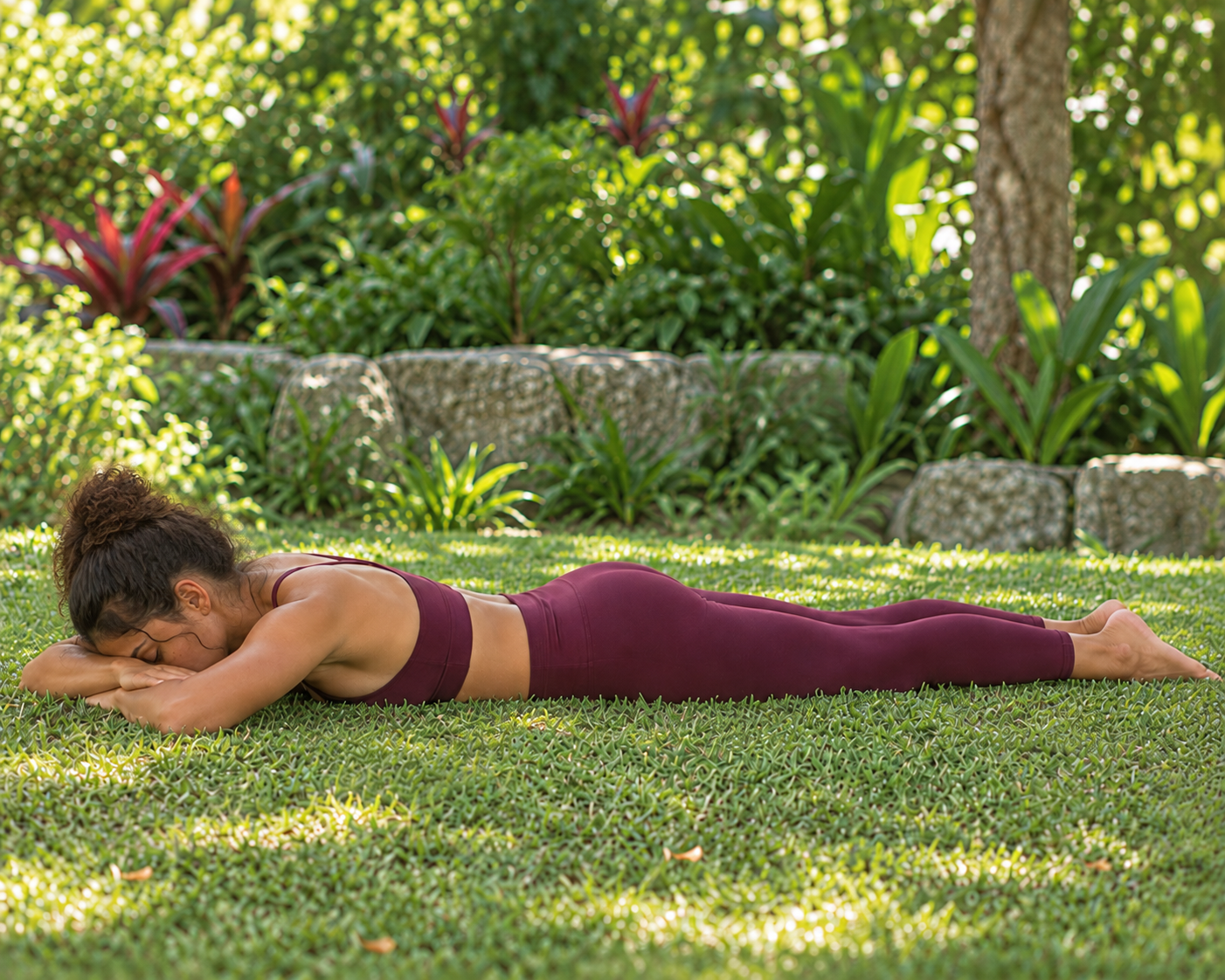
1) Crocodile Pose
Lie on your belly, with your legs long, and tops of your feet resting flat.
Cross your forearms and rest your forehead on them, keeping enough space to breathe comfortably.
Emphasise breathing into your belly
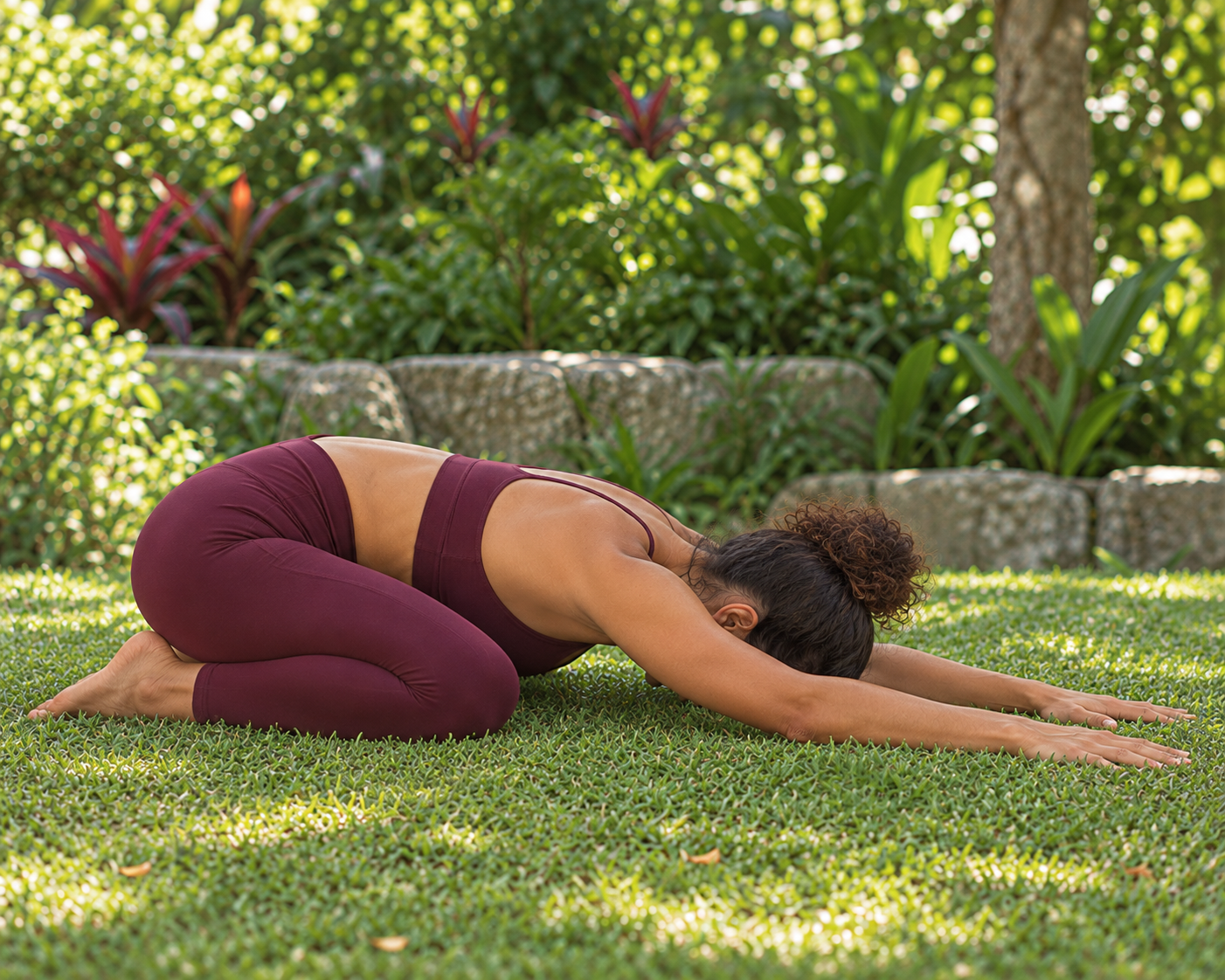
2) Child’s pose (only if mobility allows)
Come onto all fours. Bring your knees a little wider than your hips, and bring your big toes together.
Sit your butt back toward your heels, only as far as feels comfortable.
Walk your hands forward and let your chest soften toward the floor. If it feels okay for your neck, rest your forehead down.
Emphasise breathing into your back
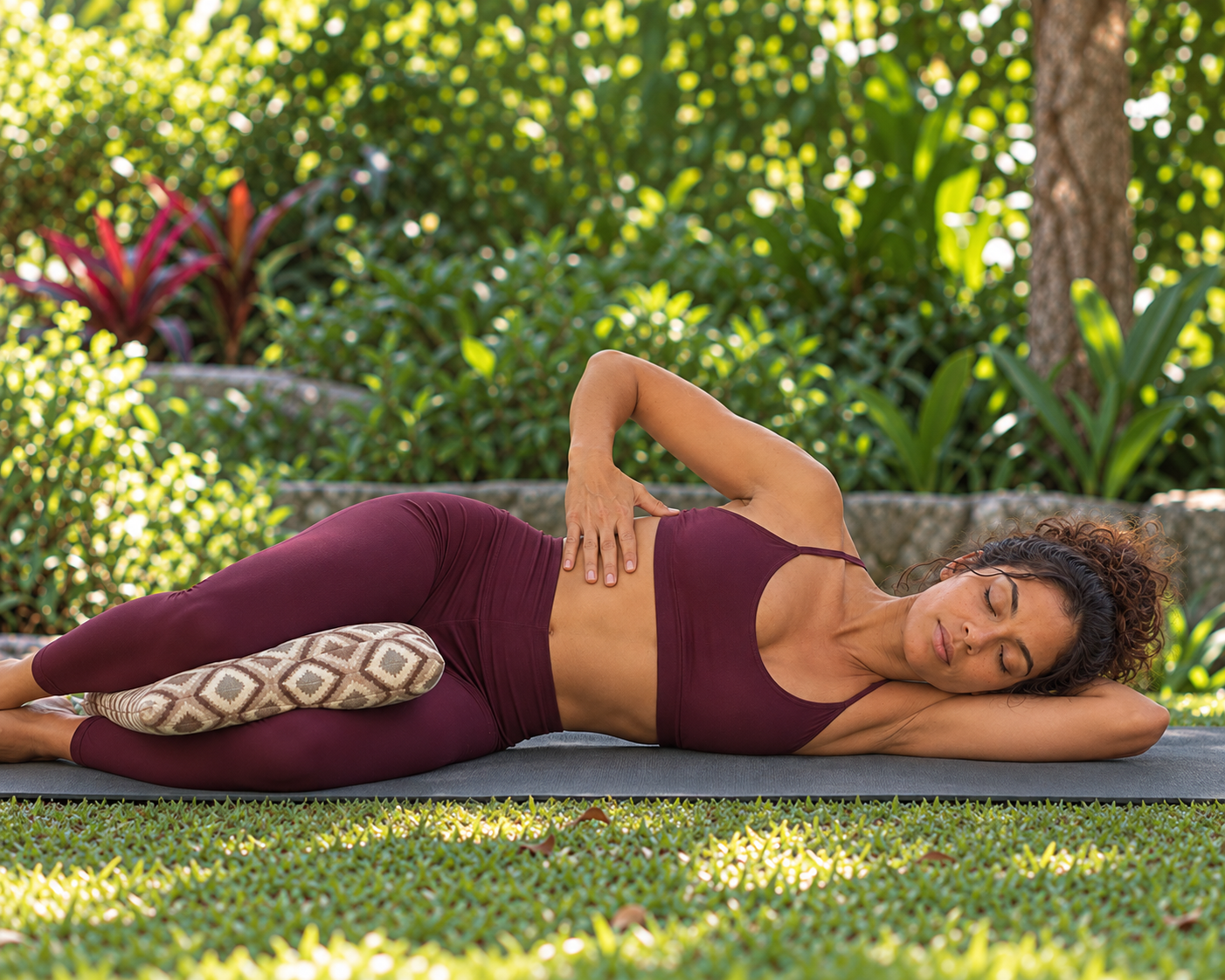
3) Lying on side (repeat on both sides):
Lie on your left side with your head supported, knees slightly bent, and a pillow between your knees if needed.
Bring your right hand to the right side of your ribcage in your power pose.
Emphasise breathing into your right ribcage
(Then repeat on the opposite side)
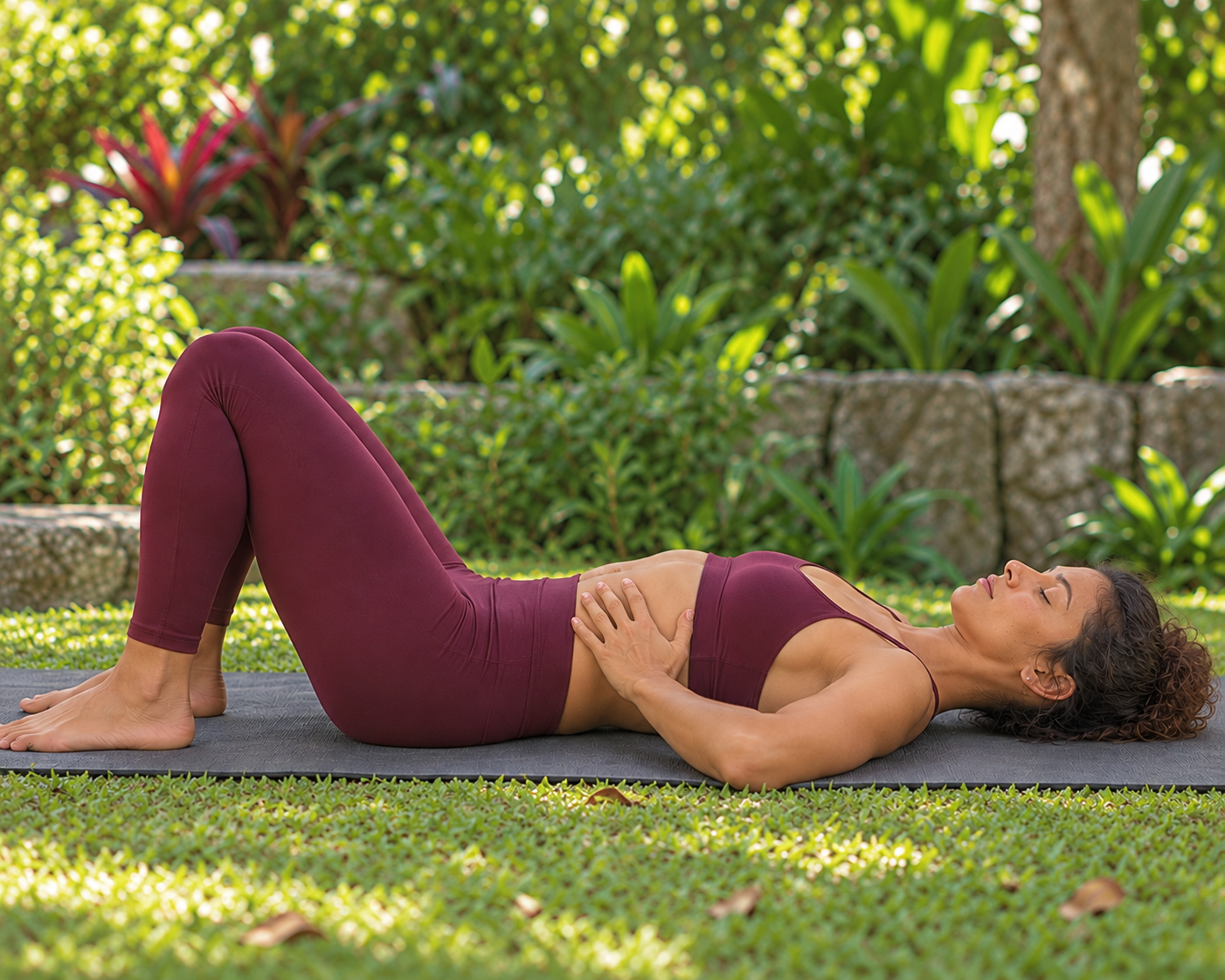
4) Lying on back:
Lie on your back with your knees bent and feet flat on the floor.
Bring both hands to your lower ribcage in your power pose.
This position brings everything together - emphasise breathing into your belly, back, and sides